UGC Platforms: What They Are and How to Use Them Right
von David Winker
March 26, 2026
Short answer: UGC platforms are places and tools where user content is created, collected, or commissioned, from Instagram and TikTok to review sites to specialized UGC marketplaces and creator software. Brands use them because real experiences are more credible than classic advertising and because creator videos work well for social ads. The key is to choose the right type of platform for your goal and to clear usage rights properly.
In brief
UGC (user generated content) is photos, videos, reviews, or posts that come from users or creators rather than from the brand itself.
UGC platforms range from social media and review sites to marketplaces and software through which brands commission content.
UGC has evolved from forums and blogs into an established ad format for paid social.
The main benefits: credibility, lots of content for testing, insights into your target audience.
If you use UGC for advertising, you need clear usage rights and correct ad disclosure.
What is user generated content (UGC)?
User generated content (UGC) is any content created not by a brand but by users: an Instagram post with a new product, a Google review, a TikTok review, or a photo in a forum. UGC works because it comes from the perspective of people who use a product themselves.
In marketing, the term is used in two senses today:
Organic UGC: Customers voluntarily share experiences, photos, or reviews.
Commissioned UGC: Brands commission creators to produce videos or photos in an authentic user style, usually for ads, product pages, or their own social channels.
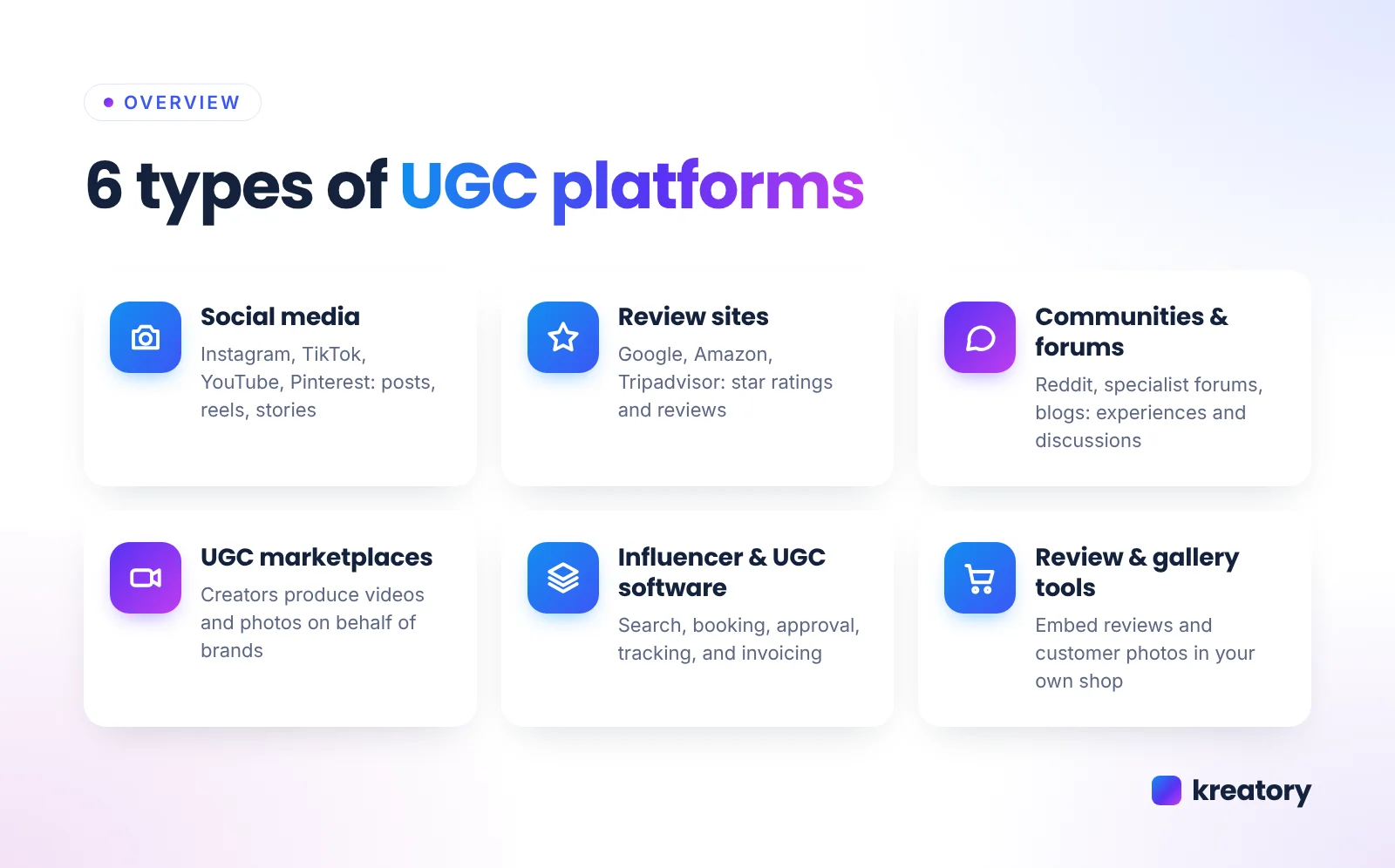
UGC platforms are all platforms on which user generated content is created, collected, or brokered. For brands, six types can be distinguished:
Social media platforms: Instagram, TikTok, YouTube, Pinterest, or Facebook. This is where most visible UGC is created, as posts, reels, stories, and comments.
Review sites: Google reviews, Amazon reviews, or Tripadvisor. Star ratings and testimonials directly influence purchase decisions.
Communities and forums: Reddit, specialist forums, or blogs where users discuss products and answer questions.
UGC marketplaces: Brands commission creators specifically for videos or photos, usually for advertising.
Influencer and UGC software: Platforms that bundle search, booking, approval, tracking, and invoicing of creator collaborations.
Review and gallery tools: Software that collects reviews and customer photos and displays them in your own shop.
Six types of UGC platforms, from social media to creator software.
UGC is as old as the internet itself. What has changed above all are the formats, the reach, and the role of brands.
1990s: Forums, guestbooks, and the first personal homepages. Users share texts and images, mostly in small communities.
2004 to 2006: With Facebook (2004), YouTube (2005), and Twitter (2006), sharing photos, videos, and status updates becomes an everyday habit.
2010 to 2011: Instagram and Snapchat turn the smartphone into a camera; visual content and later stories take hold.
2016 to 2018: TikTok launches in China as Douyin and becomes the international platform for short vertical videos. Reels and Shorts follow.
Today: UGC is an ad format in its own right. Brands commission creators specifically to shoot videos in a user style and run them as social ads.
From forums to creator platforms: the evolution of UGC at a glance.
This evolution has also created a new profession: UGC creators produce content for brands without necessarily posting it on their own channel. A large reach is not required for this.
Why should you use UGC platforms for your marketing?
UGC pays off above all because it builds trust and gives you plenty of content to test. The main reasons at a glance:
Credibility: Real people's experiences are more convincing than a brand message. Ratings and honest reviews lower purchase barriers.
Fits the platform style: A creator video blends naturally into the TikTok or Instagram feed and is less often scrolled past as advertising.
Lots of content for testing: With several creators and hooks, you quickly test which message resonates best.
Efficiency: UGC productions are usually leaner than classic ad shoots.
Insights into your target audience: Comments, reviews, and creator feedback show you which arguments and objections really matter.
Sense of community: When you share your customers' content, you strengthen their bond with the brand.
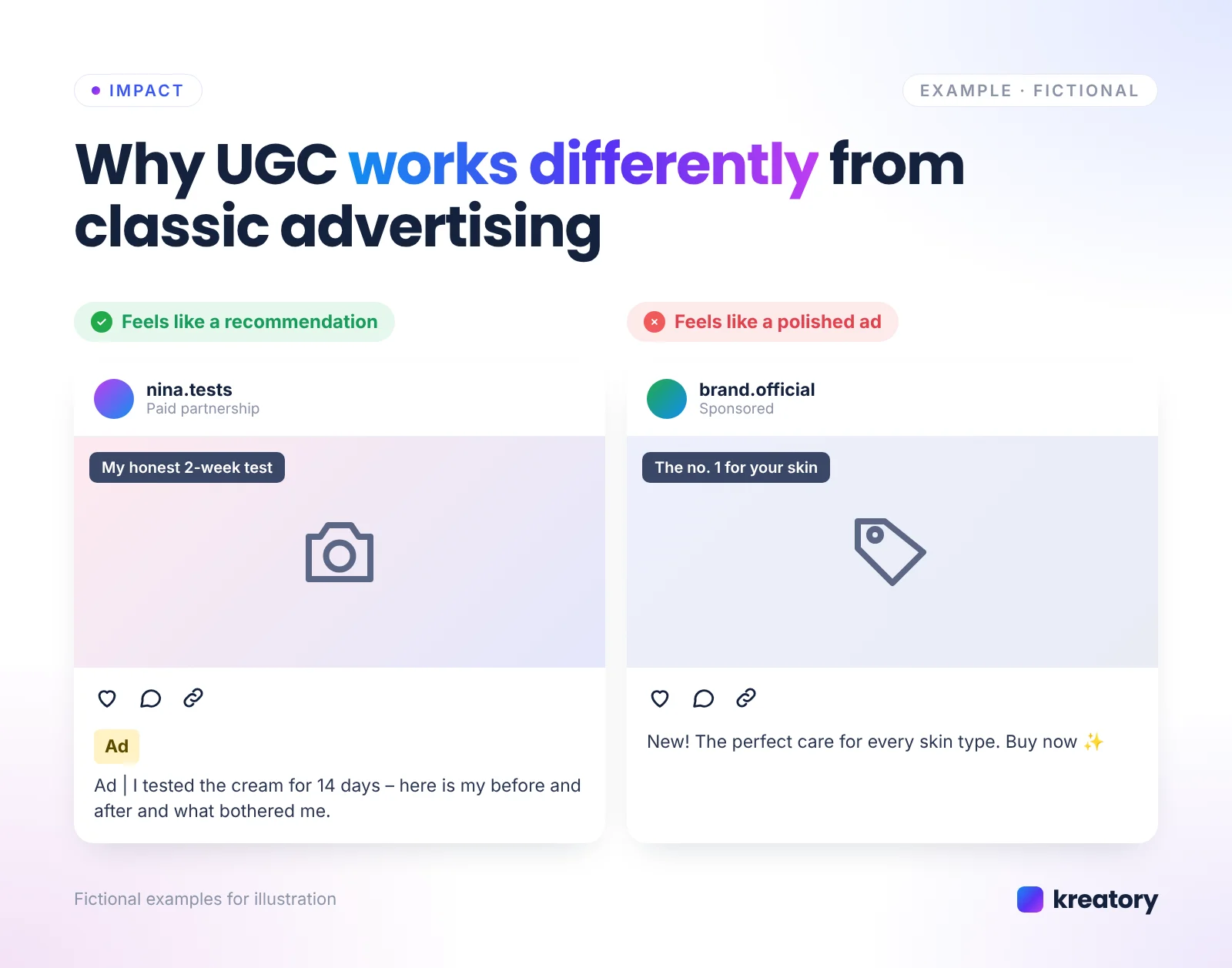
Fictional examples: an honest review feels different from a polished ad.
How do you use UGC platforms the right way?
UGC becomes successful when you approach it in a structured way. These steps have proven themselves:
Define your goal: Do you need content for ads, social proof in your shop, or reach through creators?
Choose the right type of platform: UGC marketplaces or creator software work for ads; review tools work for social proof.
Write a briefing: Product, target audience, core message, do's & don'ts, format, and deadline. You can find templates in our briefing templates and in our briefing guide.
Select creators: Work samples and audience matter more than followers. Tips in finding UGC creators.
Clear usage rights: Record channels, duration, territory, and editing rights in writing.
Approve and test: Review content before publication, then test several variants against each other.
What do you need to consider legally with UGC?
With UGC, two points are particularly important: rights to the content and ad disclosure.
Usage rights: Even if customers show your product publicly, you may not use their photos or videos for your own advertising without consent. With commissioned UGC, you regulate the rights in the contract.
Disclosure: If a creator posts on their own channel in exchange for consideration (money or product), the post must be recognizable as advertising; in Germany this follows from Section 5a(4) of the Unfair Competition Act (UWG). Details in our article on ad disclosure in influencer marketing.
This article is not legal advice.
How does Kreatory support UGC sourcing?
Kreatory is an influencer and UGC platform with access to 5.4M creators. You set up a campaign in under 10 minutes, the AI suggests suitable creators and reaches out to them automatically. Creators send you offers, you book with one click and approve content before it is posted. You receive UGC including usage rights; alternatively, you can use barter deals and compensate creators with your product instead of budget. Payouts to creators run automatically, and you get one invoice from Kreatory as your billing partner.
Want UGC for your ads and social channels?Register for free and get your first offers. You can find more information on our UGC sourcing page.
FAQ on UGC platforms
What does UGC mean?
UGC stands for user generated content, meaning content created by users or creators rather than by the brand itself, such as reviews, photos, or videos.
Is Instagram a UGC platform?
Yes. Instagram, TikTok, YouTube, and Pinterest are among the most important UGC platforms because users create most of the content there themselves.
What is the difference between a UGC creator and an influencer?
A UGC creator produces content for a brand's channels or ads; their own reach is not required. An influencer publishes content on their own profile and brings their community as reach.
Can I simply use customer photos for advertising?
No. You need the consent of the people who created them. Ask, and record what you may use the content for and for how long.
How much does UGC cost?
That depends on format, scope, and usage rights. Some platforms charge per video, others via a subscription plus creator fee. What individual creators cost is covered in our article on influencer marketing costs.
10 Success Stories for Free
👉 Want deep insights into influencer marketing & UGC sourcing and curious about our success stories?📈
Download 10 success cases for free now 👇
Thank you! Your submission has been received!
Oops! Something went wrong while submitting the form.
This site is protected by reCAPTCHA, and the Google Privacy Policy and Terms of Service apply.